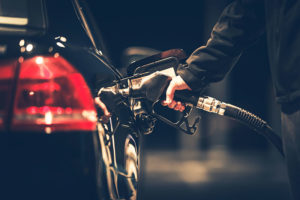
 The Philippine government through the Department of Finance (DOF) launched the Fuel Marking Program in August 2019 in aim to combat oil smuggling in the country thereby generate revenues to finance various infrastructure programs and social investments throughout the nation.
The Fuel Marking Program is the process of marking imported and refined petroleum products such as gasoline, diesel and kerosene using a sophisticated, un-replicable marker after taxes and duties have been paid. This program, forms part of the Tax Reform for Acceleration and Inclusion (TRAIN Act), enacted into Law on 19 December 2017 and took effect on 01 January 2018.
The DOF mandates its two attached agencies, the Bureau of Customs (BOC) and Bureau of Internal Revenue (BIR) as the lead implementing agencies to execute and oversee the fuel marking in depots, vessels, tank trucks and other fuel-transporting vehicles; and the fuel testing in refineries and its attached depots, retail stations, respectively. The Consortium of SGS Philippines, Inc and SICPA SA, a Switzerland-based company was commissioned to implement the project under a five-year contract which kicked off in 2019. The marking cost is P0.06884 per liter, which will be shouldered by the government during its first year of implementation or until the utilization of the approved budget (P1.96 billion), whichever comes first.
Reports from the government, NGO initiated studies, including that of an independent study commissioned by local oil players estimates forgone revenues in the form of excise taxes and value-added taxes (VAT) to be around P26.9 billion by the DOF (2016), P37.5 billion by an Asian Development Bank study and P43.8 from the oil industry.
In 2019, the DOF estimated to have marked a total volume of 15.2 billion liters, with about 6.8 billion liters for the BOC, and 8.4 billion liters for the BIR. The government expects that all fuel products covered under the fuel marking program will be marked by 03 February 2020, showing proof that customs duties (for imported petroleum products) and pertinent taxes (for locally refined or manufactured petroleum products) have been paid.
The Philippine Institute of Petroleum (PIP) fully supports the government’s initiative to curb smuggling from both outright physical and technical smuggling through the (a) implementation of the fuel marking program, (b) strengthening of the VAT monitoring system, and (c) marine vessel traffic monitoring system. Similarly, the PIP advocates that these programs should be conducted in a safe and efficient manner to ensures unhampered operations and safety within the oil companies’ facilities and personnel. Furthermore, we believe that the success of this program will depend largely on the equitable and level implementation across all downstream oil players with prioritization on vulnerable trading areas with significant price variations.
 The Philippine Institute of Petroleum (PIP) changes leadership as its Board of Trustees acknowledge the dedication and service of its incumbent Executive Director, Mr. Teodoro M. Reyes and welcome his successor, Mr. Raphael C. Capinpin during the Board’s Q4 2019 Board Meeting, held at Manila Golf and Country Club, in Makati City on 05 December 2019.
 Mr. Teddy Reyes has served PIP since 1998 taking the role of Assistant to the Executive Director (1998-2015) and Executive Director (2016-2019). Mr. Raffy Capinpin, a retiree from Shell brings with him 30 years of experience in downstream oil sales and marketing, in leading PIP to its greater heights effective 01 January 2020.
 The PIP Board, Advisory Board, Individual Members, Committee Members and Secretariat also welcome Mr. Jean-Pierre Battermann as the incoming President and Managing Director of Total (Philippines) Corporation and Country Chair of TOTAL Group effective 01 January 2020. Mr. Battermann succeeds Mr. Laurent Stouffe who served TPC and PIP for almost 2 years, and shall also sit as Trustee-President of PIP.
 In 2006, Republic Act 9357 or the BIO FUELS ACT OF 2006 was enacted to “Direct the use of Bio Fuels, and establishing the Philippine Bio Fuels Program.” This act essentially mandates the use of biofuels as a measure to: